Showing posts with label open classroom. Show all posts
    Showing posts with label open classroom. Show all posts

    Thursday, May 31, 2012

    Focused Chaos

    When we created this video - Growing Iridescent Classrooms - we were really tapping into the basic learning idea of this century, an idea which has been growing and developing since the 1960s.

    Growing Iridescent Classrooms
    The ideas, in which 19th century factory production techniques are replaced by much free-er, much more human paradigms, might best be illustrated in the three videos below...

    ABC's Nightline asks IDEO to recreate the shopping cart, 1999
    There are a few phrases of vital importance in these videos. "Not organized chaos," IDEO's boss says, "focused chaos." For he finds too much organization self-defeating. You must "hire people who don't listen to you," he says, "but corporate America" - and I might add, most educational systems - "aren't ready for that." Ideas need "eclectic teams" - not all people with similar educational backgrounds, not all people with similar training. "In an innovative culture you can't have a hierarchy," he adds, noting that ideas flow from everybody.

    We must get out into the world and observe, counting "seat time" is absurd. We must "have wild ideas. If everyone only came up with appropriate ideas, you wouldn't have any points to take from, to get to really innovative ideas." The team must do the evaluating. "Enlightened trial and error," "fail your way to success." Places of innovation are playful.

    Now IDEO, and other groups, corporate and non-profit, from NASA to Data General, from Mozilla to Twitter, from Push Pin Studios to Xerox PARC, wherever true learning gets to run and move toward the future, we find the kind of chaos which allows new concepts to both emerge and be tested.

    The era of the "open classroom" primary and "school-without-walls" secondary -
    that much maligned time of "new math" and "whole language" - produced the thinkers
    who revolutionized the world, creating Microsoft, Apple, Google, the supercomputer...
    I was helping my sister's family move from California to Massachusetts when I entered my brother-in-law's new place of work. I entered a huge space filled with guys in shorts and T-shirts riding bikes and skateboards, laughing, yelling, throwing frisbees, footballs, baseballs... And I realized that this workplace, at that moment creating the world's most powerful computer, looked a whole lot more like my "free school" alternative high school than like any workplace for which the traditional classroom was prepping us.

    I like this review of Tracy Kidder's capturingof the essence of that space...
    "When you're young and you get interested in something, you get passionate about it. Maybe it's because you don't know the importance of money and responsibility yet, but you really get into a sport, or hobby, or any other interest, and you do that hobby or play that sport, you write stories or fix cars, making whatever sacrifices you need to just so you can do this thing you love, not because you want to make money at it, or gain respect or admiration, but because it gives you priceless rewards and satisfaction."

    And that passion, that messy and barely controlled excitement, is what I see at places like Bridge21Learning, what I see at CoderDojos, what I see when I see kids at play, in fields, on streets, or online, what I see in good primary/elementary schools, but which I rarely see in secondary schools. - or in the often worthless virtual environments created by most educational software developers.

    Play. Joy. Chaos. Argument. Movement. Absurdity. Laughter. Human Observation. These are all required parts of the kind of learning which leads to creation rather than replication.


    Embracing the chaotic nature of learning... An Australian school at work
    There's a point here. Schools must trust childhood and children. They must embrace the search-for-the-new of adolescence. They must stop trying to turn kids into compliant adults destined to build iPads for $8.00 a day. Instead they must help develop young adults who have kept their wonder and width of vision intact. Talking to Irish educators last month in Tipperary, I noted that their nation's exam driven secondary school system left Trinity College's Medical School with great test takers who were so clueless about the world that the first thing they need is art classes, so they can learn to see and describe. If Irish kids, or American kids, came out of secondary schools that looked a lot more like IDEO, that problem wouldn't exist. And, a whole lot more students would want to come to school, instead of trying to get out of it.

    - Ira Socol

    Saturday, May 5, 2012

    Appreciating a certain teacher

    I had a pretty miserable time in "K-12" education. Hell, I've had a pretty miserable time in all my time as a "student." It's not that I'm not good at learning. I love learning. I think most of us do, but "school" is not traditionally about learning, but rather about arbitrary rules and arbitrary rankings - and I do not like either.

    Yet, within a range of horrors that "school" has been for me, there are amazing bright spots... and those bright spots are almost all related to great teachers. A third grade teacher, Mrs. Janowitz, who let me show what I could do with music and architecture and made school a little bit safe. A sixth grade teacher, Martin McNeil, who understood an 11 - 12-year-old boy's needs for certain forms of space. Alan Shapiro, who I spent four years with (formally) as teacher, mentor, advisor, friend, and who showed me what education could be. Joe Kuszai, at Michigan State University, who gave me space as an artist to grow and learn and even lead. Antonio Diaz, police sergeant and lawyer in the New York City Police Academy who focused on what I could do, not on what I could not. Y.S. Lee at Pratt Institute, a master teacher who understand the purpose of education. Jonathan White and Kathy Bailey, life changing educators in Criminal Justice at Grand Valley State University, and Alexandra Gottardo and Elizabeth Schaughency, not just great teachers and colleagues, but the "special educators" who truly transformed my life.

    below: Alan Shapiro on education, unionization, life...
    I can bring myself all the way to the present and Punya Mishra, Lynn Fendler, and Susan Peters at MSU's College of Education.

    And I sincerely thank everyone of these brilliant people... but, and in part inspired by Charles Blow, as "Teacher Appreciation Week" begins - and as people like Barack Obama and Arne Duncan begin their faux statements after years of teacher bashing - I want to speak about one teacher in particular.

    Her name is Ruth Socol, and she's my mom.

    I can remember when she began teaching - I can remember when she graduated from Hunter College - probably mostly focused on adding a touch of income stability to the family. She began teaching in a pre-union time, earned almost nothing and had any chance at free time taken up supervising playgrounds and cafeterias. I remember her up till all hours of the night at this little desk which sat by the front door working on lessons, working on grading. I remember her taking all sorts of summer jobs to help make ends meet.

    But that's not what I want to write about.

    Not her teacher pic... (obviously)... but my Ma as a young bride was
    "movie star" beautiful... and this is an incredible photograph
    I want to write about the fighter. My mom never accepted the status quo. She sure could have done all her work and gone home. There sure was plenty to do at home, and honestly, for the time, the schools she taught in were pretty good. But she wasn't satisfied, at any level.

    She fought really hard for unionization and the AFT - few elementary teachers pushed very hard for this, it was mostly a secondary thing - but she battled for it. It not only meant decent pay, it meant having a real voice. And when it came down to a big strike over teacher power in the schools - as much as it hurt her to do so - she was part of a small picket line outside of a huge elementary school.

    My mom taught third grade, which
    featured Dick and Jane in
    Streets and Roads
    when she began

    But even more critically, she fought for kids, every day. She pushed for "open classrooms," literally knocking down walls between rooms in order to build a multiage space with no desks, and almost no chairs, where kids could move and get comfortable and progress at their own rate. She pushed her administrators on this, moving them forward, embracing a newly diverse student body and making it work. She spent summers helping to create new - and multimedia - learning materials, leading the push to kick "Dick and Jane" out of the schools. Leading the push to bring manipulatives into maths. (I clearly remember a few summers, around age ten, when I had piles of Cuisinaire Rods to play with...)

    She visited her students' homes. She talked to them in the supermarket. She individualized her lessons and fought against homework. And she observed and observed and observed.

    "If I could do one thing," she told me when I was maybe 16, "it would be to never push any kid to read before third grade. Most aren't ready for it, and every year my room is filled with eight-year-olds who hate reading and never want to see a book again."

    She was among the earliest teachers I knew to toss classroom furniture and replace those desks and chairs with carpet and pillows because, as she said, "kids hate those chairs." Now, her students were no different than any other students, and what she was seeing was no different than what anyone else was seeing, but she simply wouldn't accept what she knew didn't work.

    She fought and she worked and she fought for everything that was right for kids, for her community. And she made a real difference. Hardly a month goes by in which I don't get a message in Facebook from one of her ex-students. "Am I her son?" "How is she?" "Please tell her that she changed my life." All this about a woman kids met at age eight.

    Anyway, I am her son, and I am the continuation of her life work. She is doing great, she's healthy and active and living well. And thank you, because she changed the lives of many, in really important ways, as so many great teachers do.

    From childhood, from my mom, I learned that there is no profession more important to society than teaching. And for all these years, I've wished our culture recognized that.

    Happy Teacher Appreciation Week to my Ma, to every teacher. And Happy Mother's Day too.

    - Ira Socol

    Friday, April 1, 2011

    Why space matters

    A very long time ago I was a young architecture student in Brooklyn. Pratt Institutes's School of Architecture was, at that time, a wild, ungraded, non-competitive place with no dominant style, and only, perhaps, a commitment to contextualism and social justice holding it together. One night they showed The Fountainheadand the the audience in Higgins Hall booed Howard Rourke/Gary Cooper intensely at the end. Ayn Rand's selfishness would find no footholds in the Fort Greene of the 1980s, but I digress...


    In a design studio one semester we were greeted with a poster announcing a contest to design "The McDonald's of the Future." At first this seemed frivolous - we had been working on things like libraries, hospitals, the Vietnam Veterans' Memorial - and now? Fast food?

    But encouraged to take it seriously I began an investigation which changed my sense of design forever.

    I grabbed a sketchbook. And with that sketchbook I wandered through every fast food restaurant I could find. The urban storefront ones in downtown Brooklyn and the standardized suburban restaurants. I also plumbed my memory, thinking of that "first" McDonald's on US-1, and the trips there in the old Rambler. All of us eating in the car - there was no inside. And thinking of one winter night, stumbling off a frozen Interstate 96 in Brighton, Michigan - hitch-hiking between East Lansing and Ann Arbor - and finding the warm glow of a McDonald's on the horizon.


    The original McDonald's design, success through subtraction
    I realized that no building I had ever seen was more "purpose-built" than a McDonald's restaurant. Everything, absolutely everything, was design to (a) lure you in, (b) make you hungry, (c) get you out, and (d) make it easy to clean up after you. Other fast food buildings of the time, though often pretty good at expressing their differences (Wendy's were carpeted with those plastic Tiffany lamps - attempting to say "upscale," Burger Kings were "woodier" - more "adult"), didn't come close.

    Example: All the Burger Kings of the time had their service window just inside the doors, on the left as you entered, with "dining" space on the right. All "new" McDonald's of the time (those 'post-Golden Arches') had the service counter in the back. If you drove, or walked, past a Burger King you saw people waiting in line, if you you rode, or walked, past a McDonald's you saw happy people eating.

    Example: The McDonald's of the 1980s might be garish inside, but it glowed yellow - a warm glow of childhood memory - to all of my age who had discovered it as children. Burger Kings and Wendy's looked dim from outside. Fine if you were headed to a pub, but... And why did we have such great childhood memories? Not because of what McDonald's had added to the American Drive-In, but what was taken away. The restaurants which went global under Ray Kroc eliminated four 1950s/early 1960s mainstays which attracted crowds of rowdy teens - the car hops, the juke box, the public phone, the cigarette machine - and thus made "Micky D's" the place families went.

    OK, this isn't really about McDonald's. It's about your school.

    What is your school designed to do?


    The typical American school follows the design parameters laid down by Henry Barnard in the 1840s. He took the school room as designed by William Alcott two decades earlier and assembled it into a factory for learning. "Double-loaded" corridors created an assembly line for the Prussian System of learning according to chronological age - further separated by room (secondary) or by the clock (primary) into discrete areas of study. "The Facher system, as it is termed in Germany where it is most popular, consists in employing separate teachers for separate studies, or as we should apply it here, for distinct departments of government, and of instruction. This is the principle on which instruction in our colleges and most of our higher seminaries is given, and is in reality the mixed method carried to its highest perfection. The vital error in our common schools, as they are now organized, is the practice of employing one teacher for the government and instruction of fifty or sixty children of every age, of both sexes, in a great variety of studies, and in different stages of proficiency in each study." (Barnard 1848 p.80)


    Barnard is very specific: "The school-room should be a parallelogram, the length about twice the breadth." (p. 81) "The lower parts of the windows should be at least 6 feet from the floor, in order that the light may not be inconvenient, and the walls be at liberty for the reading lessons, etc., which are to be attached to it." (p.81) "The center of the platform is the place for the masters desk; and on each side there may be a small desk for the principal monitors." (p.81) "The entrance door should be on the side of the platform, in order that visitors on entering the school, may have a commanding view of all the children at once." (p.82) "Over the black-board, are the printed and written alphabet, arithmetical and geometrical figures, the pauses, &c., for copying or general exercise." (p.95)

    Barnard describes everything, from desk heights to symmetry in entrance halls. He establishes the need to truly separate the classrooms from the play-grounds. He installs blinds on the windows. Thankfully, he sets ventilation requirements. And, in so many ways, the schools he describes are those we have today.

    What are your schools designed to do?

    The last time people really tried to re-imagine the American school building it produced the "open classroom schools" which are now all carved up. These schools were built around big open spaces designed for between 100 and 150 children, which can be brilliant, unless, as all these schools attempted, you try to run 4 or 6 traditional classes in each giant space. Teachers tried to do just that, and the "open classroom" - and school re-design - got a bad reputation because of a complete failure of school leadership to re-imagine learning.

    But it is time. Today, from the first moment your kids arrive at school we divide them and organize them. We tell them that the absolute priority is to get where they've been told to go on time. Should that be our first message? Today we announce to children that learning happens in a specific place - their specific place. That learning happens now, but not then. That learning is something which starts and stops according to Pavlovian training. Are those the messages we intend to send? Today we continue to divide children up, not by interests or passions, not even by specific capabilities as William Shearer (1894) wanted, but first by age and then - typically - by chance - you got this teacher and you got that teacher.

    And then we line our students and teachers up as eggs in a crate. Isolated. Disconnected. If kids here are learning this, kids there gain nothing from it.

    But our schools could be different. Take a look at these Danish schools... one newly built (top), one renovated (bottom)...


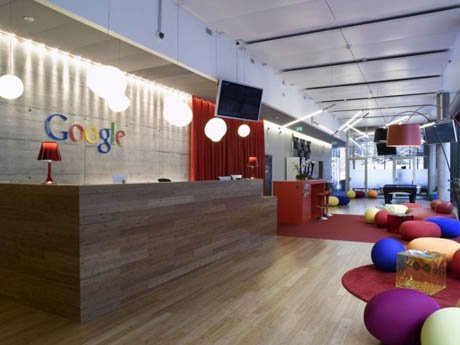
    These schools send different messages, require different pedagogies, and create an entirely different sense of what learning means. They are not the schools of 1848 or 1898 or 1948 or even 1988, but then, our students are going to emerge into the world of 2018 and 2038, and if we look at workplaces even today - say Google or Quicken Loans or YNNO or Haworth or wherever, you will find that today's work environments don't much look like your schools either. Your schools are designed to turn out employees who work in offices like those picture in Jack Lemmon's The Apartment, or who work in factories best portrayed in Charlie Chaplin's Modern Times. Even the American universities we are supposedly preparing our children for long ago abandoned most of the nonsense... the rigid time schedules, the lack of recess, the required attendance, the assigned seating, the lack of choice which characterize huge parts of our school design. Can anyone besides our US President who has actually seen both a KIPP school and an Ivy League campus actual think that the former - in any way - preps students for success at the latter?

    So take a walk around your school. Think, "spaces matter." Consider, even if you cannot reconstruct, how to re-imagine. Where can kids - of all ages - sit and collaborate in your hallways? Why do you have desks in your classrooms? Don't kids hate sitting there? Why do you have whiteboards mounted in one place? Wouldn't tablets or tabletPCs be better? Why do you have bells and discrete subjects? Shouldn't learning be integrated? Why do you have grades set by age? Aren't you eliminating both mentoring and the chance to rush ahead? Why would a teacher ever close their classroom door? Should learning be a secret?

    Spaces matter because as human animals we all respond to our environments. And if your kids are all sitting at desks, if your classroom has a "teaching wall," you are back with Henry Barnard, you are creating children prepared for the world he wanted.

    If that's not what you want, re-think, and re-design.

    - Ira Socol

☝