"Technology is neither dangerous nor irrelevant. It is merely a tool and like all tools has limitations." writes "Pat" in response to my article [Stop Chasing Cheaters] on Inside Higher Ed. But saying that "technology is merely a tool" is to discount the obvious. Every technological change alters how humans perceive the world, and how they function within it. Education must keep up with those changes.
The technology of information and communication obviously creates these changes - the introduction of cave painting, of writing, of books, of photography, of recorded sound, of motion pictures - all fundamentally changed the context for human learning. The first time American students watched film of the Spanish-American War or British students film of the Boer War, the way students learned and understood current events changed forever. The fact that we can actually listen to Theodore Roosevelt speak but not Abraham Lincoln creates dramatic differences in how we might understand these men's political appeal and abilities. The introduction of mailed correspondence, of the telegraph, the telephone, the radio, the television, all altered human communication patterns in vital ways, and thus learning. Technology is not just a tool. Speaking with someone via telephone is different than writing a letter or sending a telegram. Fundamentally different, engaging different centers of the brain. Just as reading a book is different than listening to a troubadour. It is definitely not "all the same."
But all technology alters world views. Before boats humans looked at the sea in one way. In the age of clipper ships they saw it another way, in the age of steam still another. Now that our students know they can fly across it or sail beneath it, it has an entirely different conceptual quality. Trains altered our understanding of distance, cars changed our idea of time and possibility, flight our whole understanding of the world, space flight our understanding of the universe.
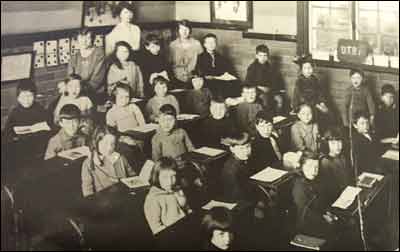
The thing that has changed least since the 1870s is the structure of our educational system. Nothing else - not our homes, our kitchens, our conveyances, or science, our businesses, our family life, our leisure time, looks remotely similar to that ancient time, but our classrooms remain the same - students lined up before a teacher - books, paper, and pencils. Could it be time to change?
- Ira Socol
The debate at Inside Higher Ed is wonderful, as are most of the interactive conversations on that site - follow along...
Thursday, May 25, 2006
It is not "just a tool"

Subscribe to:
Post Comments (Atom)
Popular posts
-
 There are two big things going on in the world this week, one fifty years old, one absolutely current, which should keep your students talki...
 -
Procter&Gamble has the tagline very wrong, but their Olympics ads explain what is crucially wrong with the argument espoused by those w...
-
 There have been two "grass roots" movements spring up in the United States since President Obama was elected. The "Tea Party...
 -
 I was working on a lesson with sixth graders and middle school teachers in doing math without any tools, just in your head. Not memorizatio...
 -
Telling stories without words. George Méliès, 1902 "Enough is enough. No more computers, cameras or consoles. No more watches, necktie...
-
It's nice out, and I'm tired of being inside and being angry. The philosophy of education can make my head hurt. And so can the low ...
-
 part one part two afterthought Bill Gates is one of the most influential people in American education, by virtue of the way ...
 -
 Happy Valley/Omelas, Buffalo High School, the Occupy Movement, and our Classrooms Back in 2008 I wrote a post about " Constructing Disa...
 -
What is "rain"? Is it a word? an idea? a bit of science? something to drink? the thought of being cold? food for crops? For me, fi...
-
 Join us, if you can, for a deep dive into these concepts at ICT in Education Conference ( Comhdh á il ICT san Oideachas ) in Thurles, Cou...


No comments:
Post a Comment